-
Retired, but still the best in the World. Fan Zhendong claims the China National Games title
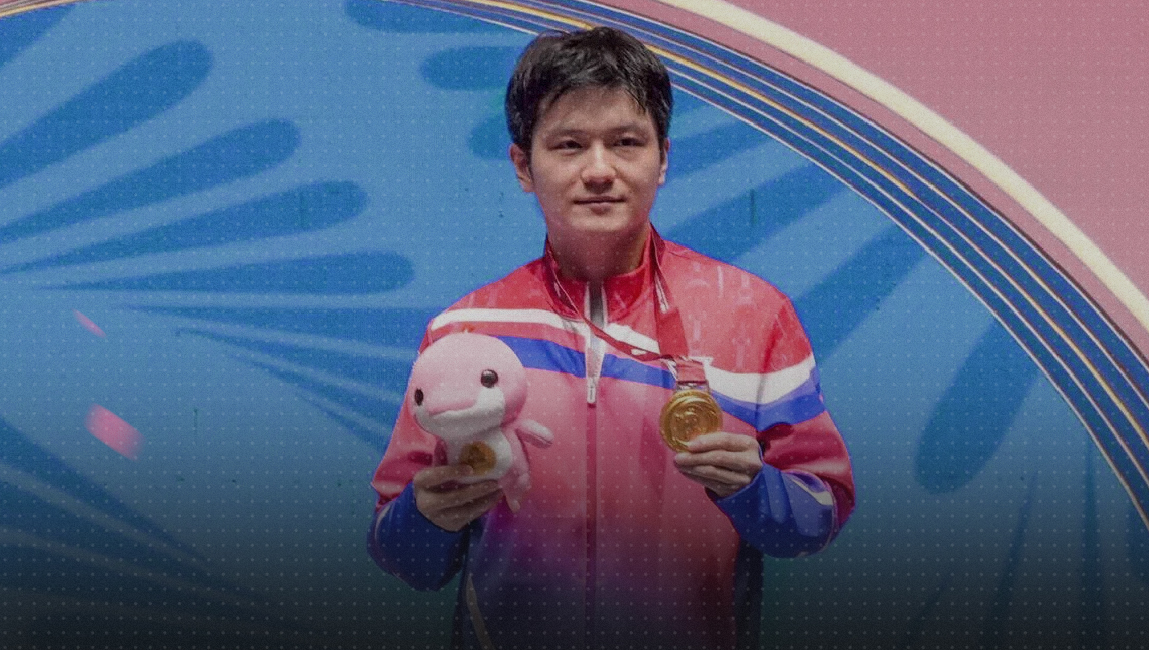
The 15th China National Games once again proved that the World Ranking in table tennis means nothing and WTT tournaments are massively overrated.
We all know that thanks to the absurd policies of World Table Tennis, the 2-time World champion in the singles event, Fan Zhendong, retired from international table tennis prior to this year, continuing his career only on club level in the Chinese Super League and the German Bundesliga.
The China National Games (CNG) is a very important tournament for the local players. Even the greatest player of all time, Ma Long, once said that it’s his dream to win this tournament. For the rest of the players, CNG is a great opportunity to display their talent and gain some extra attention from the national team coaches. If a player performs well in CNG, he will definitely get some chances outside China.
Fan Zhendong has nothing to prove anymore. Both individually and as a member of Team China, he won every possible tournament out there, and he will hold the position of one of the greatest players in history forever. Still, he has plenty of competitive drive left in him, and despite being out of the international competitions, Fan Zhendong remains the best player in the World. If someone beats two of the leading players in table tennis at the moment, what questions can there be about his current form?
AdvertisementsEven more impressive is the fact that Fan Zhendong did not even face much resistance from Wang Chuqin and Lin Shidong, confidently getting past both of them on the way to the title. In both the semi-final and the final, the reigning Olympic champion controlled the pace of the game, and his backhand was sensational. He made his opponents look pretty much hopeless.
Of course, this impressive performance raises plenty of discussion among the fans. What if… And this sentence could be continued with all kinds of statements. World Championships, WTT tour – would Fan Zhendong still be the main favorite to win the titles out there? After CNG, there should be no doubts. Of course, training and traveling with Team China, and being in a care-free mode in Germany are two completely different situations. Being back in the international action would take a bigger toll on his physical condition, and the potential injury risk would increase.
However, if you put Fan Zhendong in any specific short-term tournament, he can beat anyone and still win any of the major tournaments out there.
This success once again proves that it’s meaningless to make a big buzz about some WTT Smash or WTT Champions win. Some players might get those high rankings and then simply flop when the Olympic Games or the World Championships are on the horizon. Different levels of responsibility and preparation from the Team China side.
As we have highlighted several times, World Table Tennis has been awful in terms of creating a fair World Ranking system. If you can have three Australians in the Top 50, who cannot get past even the first round of any major tournament, then such a World Ranking is worth no more than a kid’s menu in McDonald’s…
Nevertheless, it was great to see Fan Zhendong battling the World’s best players once again. Who knows, if some injuries happen in Team China or any other bad luck before the next World Championships, maybe we will have a chance to see Fan Zhendong on the international scene once again. The top quality is still there.
FAN ZHENDONG’S ROAD TO GOLD
FINAL
4-1 vs. Lin Shidong (11-9, 8-11, 11-5, 11-3, 11-4)
1/2 FINAL
4-2 vs. Wang Chuqin (7-11, 11-9, 9-11, 11-7, 11-5, 11-7)
1/4 FINAL
4-0 vs. Sun Zheng (11-8, 11-3, 11-6, 11-8)
ROUND OF 16
4-1 vs. Xue Fei (11-4, 11-2, 11-5, 10-12, 11-6)
ROUND OF 32
4-0 vs. Zhou Yu (12-10, 11-6, 11-8, 11-6)Don’t miss out the news from Table Tennis Media, subscribing to our free newsletter and explore the premium content on our Patreon.
-
Team China brings back another gold from the Asian Championships
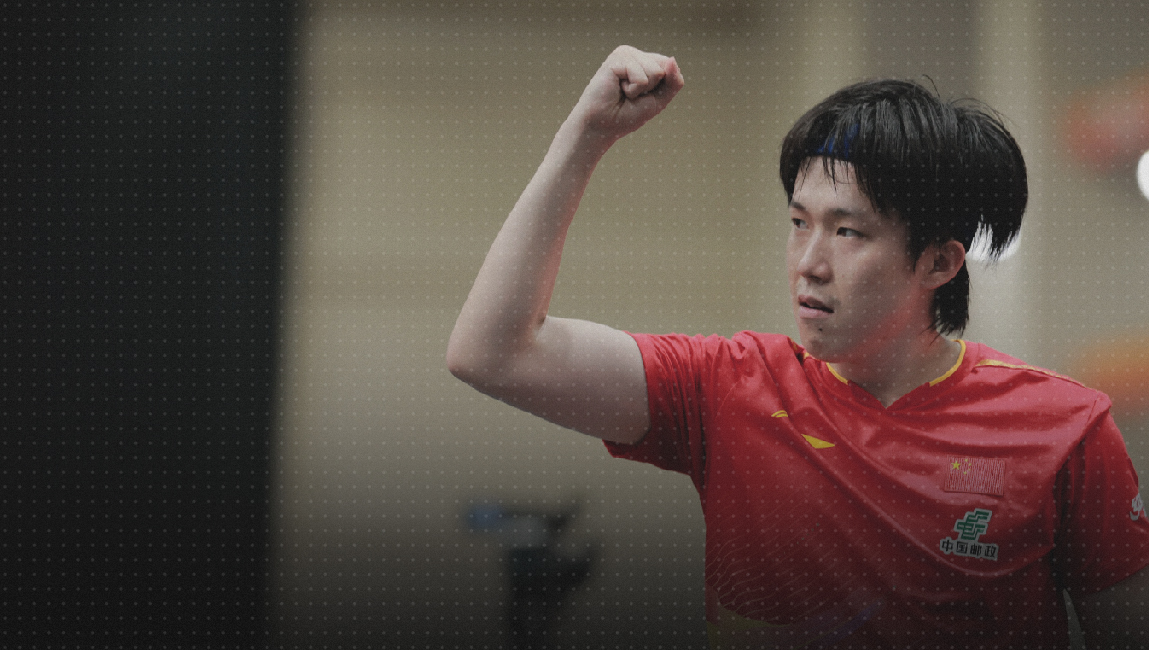
Indian city Bhubaneswar hosted the 28th Asian Table Tennis Championships, bringing together some of the strongest table tennis collectives in the World, including the reigning Olympic and World champions – Team China.
The road to the gold medals was quite a rocky one. The trio that had all the responsibilities on their shoulders, Wang Chuqin, Liang Jingkun, and Lin Shidong, faced a tough challenge in the semi-final against the Japanese team. As it sometimes happens, the true final was played in an earlier round.
Lin Shidong had an unfortunate slip in the 1/4 final round, when he lost to the rising Iranian talent, Benyamin Faraji. It took five sets for the young Iranian to beat the vice-leader of the World Ranking. His teammates, however, did not face much resistance from the other opponents, and Shidong himself had a chance to seal the deal with a 3-0 win against Noshad Alamiyan.
The semi-final against the Japanese team that took out the Koreans (3-1), turned out to be the pinnacle of the tournament. Five long-fought games, and each one was an intense, five-set showdown. The Japanese turned out to be a worthy opponent, having all their leading players in the line-up.
Tomokazu Harimoto and Sora Matsushima made the Japanese fans feel highly hopeful after wins over Liang Jingkun and Wang Chuqin in the first two games. Lin Shidong had all eyes on him in the match-up against Hiroto Shinozuka. He had to secure a victory to keep Team China afloat. His opponent put up some solid resistance, but Lin Shidong was able to take the win.
Liang Jingkun and Wang Chuqin then had to make a comeback and bring back the missing, crucial points on the way to the final. Wang Chuqin took on Harimoto, and after a long-fought 3-2 victory, Liang Jingkun stepped in against Matsushima. The Japanese had a great start to the game, taking a 2-0 lead. But as it often has happened, Liang Jingkun was able to make an amazing comeback and get that decisive 3-2 win, leading Team China into the final.
A pity for the neutral fans, the final turned out to be very one-sided, since Hong Kong’s players could not do much against the Team China trio. 3-0 win sealed the deal and added another gold medal to the great collection of China’s achievements. Tournament draws can sometimes be unfair, since the Japanese team definitely was worthy of the final, but they had to be satisfied with the bronze medals. An opposite situation was for Hong Kong. They were lucky that Chinese Taipei played this tournament without their leader, Lin Yun-ju.
2025 ASIAN TEAM TABLE TENNIS CHAMPIONSHIPS RESULTS
Don’t miss out the news from Table Tennis Media, subscribing to our free newsletter and explore the premium content on our Patreon.
-
ETTU’s vice-president Ina Jozepsone and her Family Business in the Latvian Table Tennis Federation

This is family business. Kanye West song fits this story well. Our recent video about the promotion of Latvian interests over the European by it’s vice-president Ina Jozepsone, caught some attention. However, there is much more to uncover. Our research on this topic has gone further and thanks to some of the journalists from the Latvian media outlets, we have a better picture of everything related to the Latvian Table Tennis Federation. This organization is a pure example, of why it should be forbidden for close relatives to be involved in the same organization. Otherwise, nepotism and personal interests prevail.
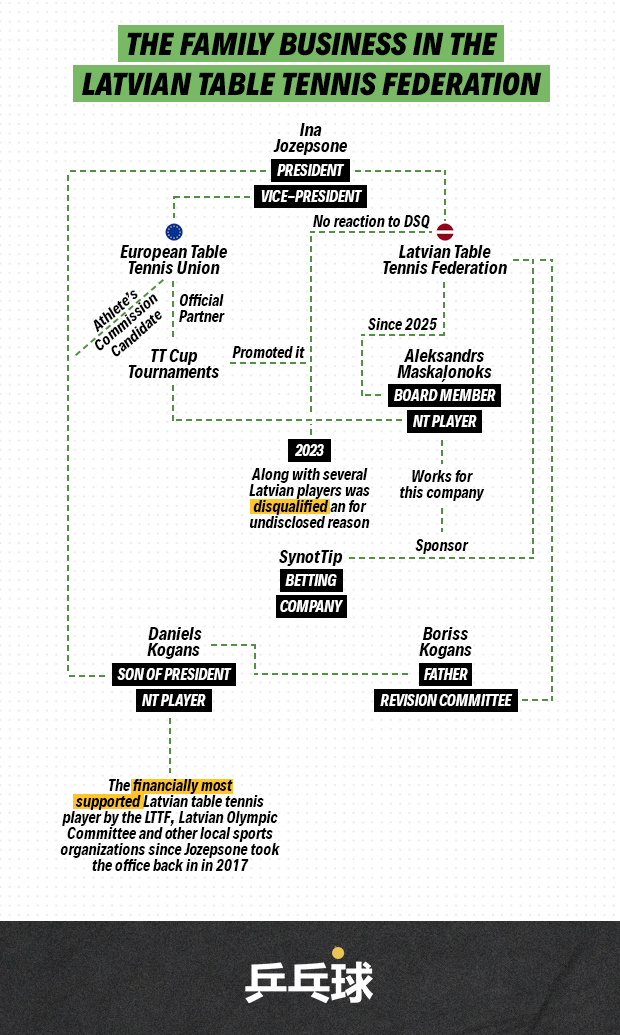
As you can see, Jozepsone has no ethical dilemmas about holding two positions at the same time that are creating a conflict of interest (especially, seeing all the recent favors Latvia is getting). Or promoting her son’s playing career, using the high position in the local federation, as well as involving his father into another position that is available in the Latvian federation. Recently, it went even further, and Daniels Kogans might become one of the members of the ETTU’s Athlete Commission. Why not? Family Business could go beyond Latvian borders. ETTU seems in favor of it.
An interesting case is Aleksandrs Maskaļonoks and his addition to the board of the Latvian federation. A Latvian international, who has ranked 1140th in the World Ranking back in 2018, Maskaļonoks, along with several other Latvian players, has been disqualified by TT Cup (one of those basement tournaments, where some betting companies allow to put bets even on the games of complete amateurs) for undisclosed reasons. Estonian media outlet Delfi.ee published a few very good materials about this tournament specifics. What could cause Maskaļonoks and other players to receive a disqualification in such kind of a tournament where players get paid 8-20 euros for simply participating… The question remains open.
But as you can see, reputational damages do not matter for LTTF or Jozepsone, as long as the newly-elected board member can be useful, and help bringing in some lucrative sponsorship deals from the betting company he works for. Too much of the word betting around this story, don’t you find?
We tried to find out the opinion of the president of the European Table Tennis Union, Pedro Moura. Unfortunately, he has ignored our letters and such Ostrich effect looks like an approval of ETTU towards all these weird things going on around Ina Jozepsone and her shady activities in the LTTF and ETTU. It honestly looks that table tennis administration is in its all-time lowest point. ITTF president Petra Sörling made the ITTF elections look like a circus and a complete disgrace, Ina Jozepsone promotes her personal interests on all levels, and ETTU president Pedro Moura seems to be the ostrich in this case, enjoying the Depeche Mode masterpiece, and silently bowing to this kind of behavior by his colleagues. Ironically, these are the same people, who love to bring up and talk about the transparency, accountability inclusivity and popularization of table tennis.
“Strong governance is fundamental to supporting growth innovation and inclusivity. Transparency integrity and accountability are core principles that will guide my leadership. We’ve already built a solid foundation with our Strategic Plan and I pledge to continue ensuring that the ETTU operates with these values maintaining regular communication with all member associations. We want to remain aligned with their needs and aspirations,” in an interview once said Pedro Moura.
What a shameless hypocrite…
AdvertisementsDon’t miss out the news from Table Tennis Media, subscribing to our free newsletter and explore the premium content on our Patreon.
-
Wang Chuqin wins his first World Championships title, as WTT brought another poorly organized tournament
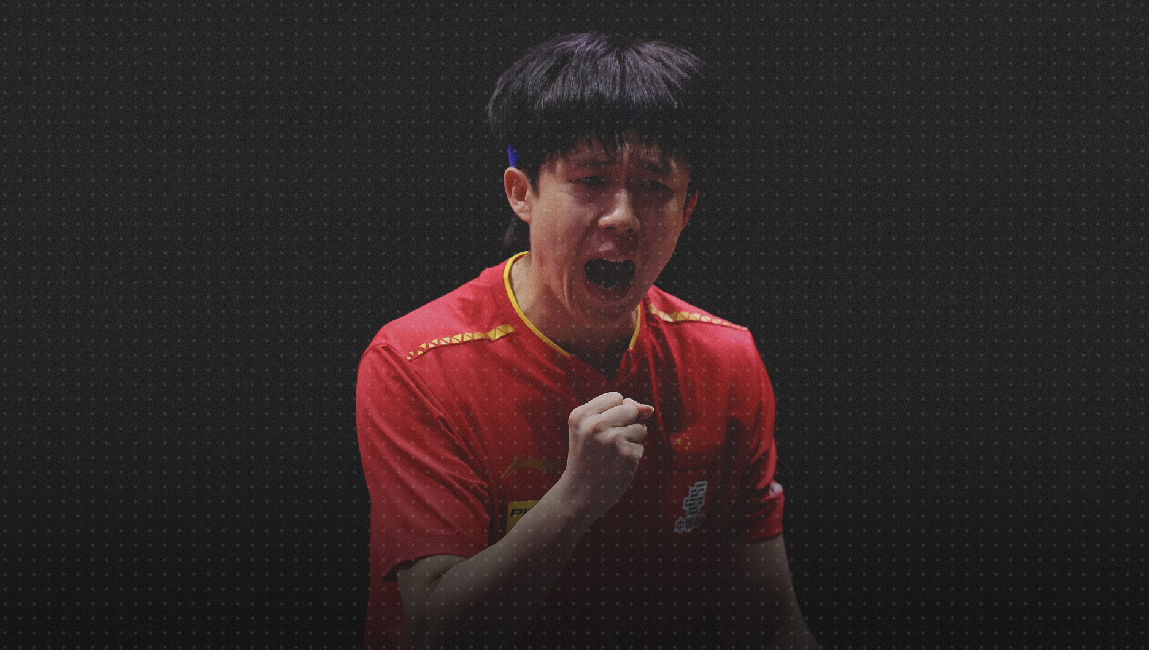
The image of the World Table Tennis Championships is getting worse under the rule of World Table Tennis. We saw a disappointing organization in Durban, back in 2023. The tournament in Doha presented a similar list of issues that made the overall impression of this prestigious competition look bleak.
Pink tables, an absolutely unfair and disastrous draw system, traditionally bad camera angles, annoying commentating by Adam Bobrow, and an almost non-existent atmosphere and ambiance in the hall, unless the Chinese fans had someone to cheer for. WTT did not take any notes from the worst-organized World Championships in Durban. Zero interest in the growth of this tournament, just pure financial interest to sell it to some wealthy country. However, compared to football, bringing table tennis to Doha was a bargain for Qatar.
To expect any kind of progress or acknowledgment of their mistakes from World Table Tennis is completely useless at this point. So let’s look at the positives. More precisely, the sole positive thing this tournament brought was World-class talent and some truly exciting matchups on the way to the final.
One of the main surprises of this tournament was the Englishman – Tom Jarvis. He enjoyed a fine run, making it to the Round of 16, and beating the 2022 European champion Dang Qiu on the way. Jarvis showed some solid resistance to Liang Jingkun, and this tournament will be one to remember for the Englishman. But is he just a one-hit-wonder or someone, who will bring consistent late-round exits in the next World & continental championships – only time will show. Age-wise, the best years are still ahead of him.
The one who once again wrote his name in the history books was Liang Jingkun. He has been a medalist in the singles event for four consecutive World Championships. Only 8 players in history have been able to achieve this incredible feat. Liang Jingkun throughout the years has become the most reliable, consistent, and mentally strong Chinese player. His loss to Hugo Calderano in the semi-final was a hard-fought battle and by far the tournament’s most dramatic and quality match. Liang Jingkun might lack the singles gold medal on his resume, but this year’s achievement cemented his name on the list of table tennis all-time greats. We need to value consistency more.
PLAYERS WITH 4 OR MORE CONSECUTIVE MEDALS IN THE WTTC SINGLES EVENT
 Viktor Barna
6 times1930 
1931 
1932 1933 1934 1935 Ma Long
6 times2009 
2011 2013 2015 2017 2019  Bohumil Vana
5 times1938 1939 1947 1948 1949 Guo Yuehua
4 times1977 1979 1981 1983 
 Richard Bergmann
1936 1937 1938 1939  Jan-Ove Waldner
4 times1987 1989 1991 1993 Wang Hao
4 times2007 2009 2011 2013 Liang Jingkun
4 times2019 2021 2023 2025 Of course, the main heroes of this event were the finalists Wang Chuqin and Hugo Calderano. The Brazilian was able to maintain his excellent form from the World Cup run and get past Liang Jingkun in the semi-final. Wang Chuqin did not face much resistance on the way to the final, losing no more than two sets in a single game. In the final, the Chinese star looked confident and was always a step ahead of his opponent. Calderano had an exhausting semi-final both, physically and mentally, and it probably played some part in his bleak final’s performance. Nevertheless, it was a historic run for the Brazilian. His name will be in the history books of the sport for sure.
The players outside Asia have definitely shortened the gap between them and the Chinese leading players. At the same time, Team China faces the change of generations and two monumental players retired at the start of this year. Wang Chuqin and his teammates had a lot of pressure on them, and while they failed to cement their dominance in the doubles events, the singles event did not disappoint.
In conclusion, the World Championships has clearly lost its appeal and true sense under the WTT rule. In the past, it was a tournament for the World. Every nation had a chance to participate and enjoy the atmosphere of this massive event. Now it moves towards being an elitist tournament with zero chance for the athletes from small nations (except Oceania and its absurd promotion) to get a taste of taking part in the World Championships. This concept is wrong in its core. But no organization is eternal. One day World Table Tennis will be replaced with some new organization, and hopefully, it will bring back the glory to this tournament. Currently, the hashtag #ShameToWTT is all that this incompetent organization deserves.
MEDALISTS OF THE 2025 WORLD TABLE TENNIS CHAMPIONSHIPS
SINGLES EVENT Player Age WR 2023 WTTC
Performance Wang Chuqin25 2  Hugo Calderano
28 3 R128 Liang Jingkun28 5 Truls Moregardh23 7 R32 DOUBLES EVENT  Shunsuke Togami Hiroto Shinozuka
23
2130
28R16
DNP Lin Yun-ju Kao Cheng-jui
23
2012
24DNP
R64 Felix Lebrun Alexis Lebrun
18
216
8R16
R16 Esteban Dorr Florian Bourrassaud25
2599
134DNP
DNPMIXED DOUBLES EVENT Wang Chuqin Sun Yingsha25
242
1 Maharu Yoshimura Satsuki Odo31
2173
8DNP
DNP Wong Chun-ting Doo Hoi Kem
33
2847
38 Lim Jong-hoon Shin Yubin
28
2044
101/4 FINAL
1/4 FINALDon’t miss out the news from Table Tennis Media, subscribing to our free newsletter and explore the premium content on our Patreon.
-
Can Hugo Calderano keep up his form at the World Championships after his World Cup triumph?
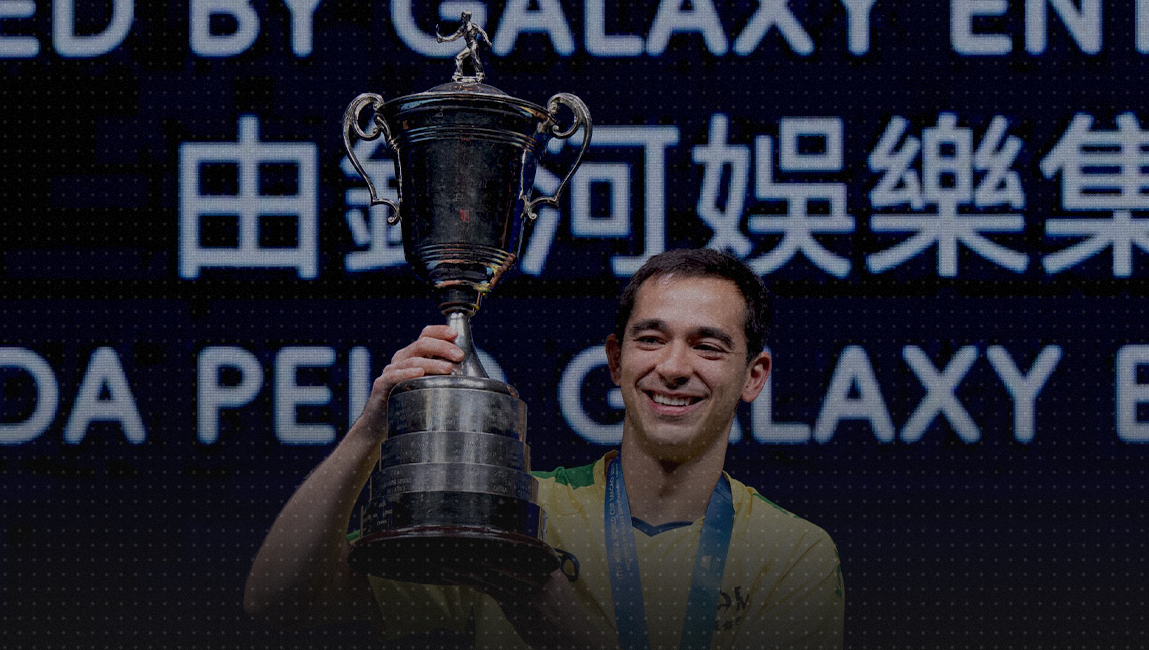
The career of Hugo Calderano has been an interesting journey with some recent ups and some painful downs in the past. To some extent, the Brazilian star has been lucky to represent the South American continent, since the wins on the continental level have been a solid boost for his World Rankings points.
In 2025, Calderano was finally able to break his spell of unsuccessful runs at the major tournaments, and he won the World Cup in Macao, displaying a truly consistent form in every game. However, the history shows that winning the World Cup isn’t really a guarantee for success at the most important tournament that everyone dreams of winning – the World Championships.
And it totally makes sense. It’s very difficult even for the best players to reach the peak of their powers twice in the same year. Usually, it happens just once a year. When the biggest tournament of the year is coming up, all the preparation process is set up to bring the best performance specifically at that time. That’s why the Chinese players can sometimes have disappointing games at pro tours or the World Cup, but then come up strong when it counts the most at the World Championships. This tournament matters the most.
Let’s look at the historical perspective of this topic in an infographic below.
The performance of the World Cup Winners at the World Table Tennis Championships of the same year.
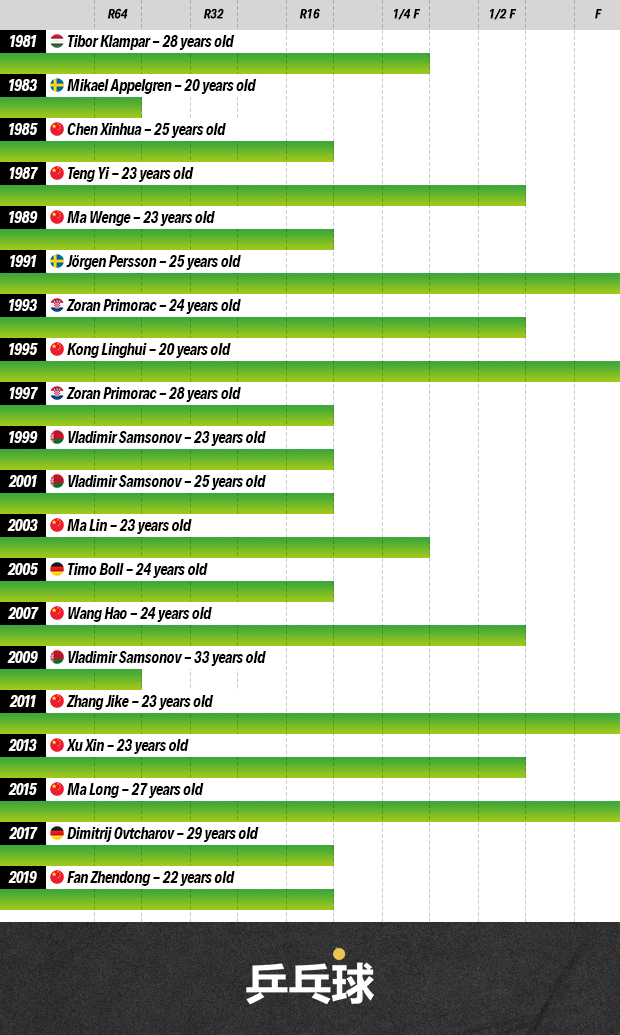
As you can see, of the 20 World Cup winners, only 8 were able to win a medal at the singles event of the World Championships. Only two of them were non-Chinese players – Jörgen Persson and Zoran Primorac. Looking purely on numbers, Hugo Calderano has less than a 50% chance to keep up his impressive form and win his first medal at the WTTC.
In addition to this, the pressure levels will be much higher in Qatar, and the Chinese team will definitely do their homework to analyze Calderano’s game even more carefully to avoid the mistakes they had in Macao. The stakes at the World Championships are very high, and for the Chinese players, it’s traditionally a must-win mentality.
If Calderano can add another major accolade in Qatar, it will finally push his name into that list of all-time great players. Not on the same level as the World champions (unless he wins it), but at least Calderano could be recognized as a player who can actually win something big on the biggest stage. Considering his style of play, it might be one of the last great opportunities to strengthen his legacy and shine on the biggest stage.
Can Calderano do it and prove the statistics wrong? The question remains open until the end of this month.
Don’t miss out the news from Table Tennis Media, subscribing to our free newsletter and explore the premium content on our Patreon.
-
TT Saitama makes history, winning its first Japanese T-League title against Harimoto’s club

One of the most competitive leagues in the World saw an exciting final match-up of the 2024/25 season.
The Japanese T-League’s 2024/25 season saw some historical changes, as two new clubs (Kanazawa Port and Shizuoka Jade) entered the elite of the local club competition and marked the league’s expansion. A debut for both of these clubs was far from successful as both of them failed to make it to the play-offs. Another historic moment was Kinoshita Meister Tokyo club’s performance this season. For the first time in its history, the club from Tokyo failed to finish the season with a medal.
The race for the best playoff spots was tight, as three clubs finished the regular season with 16 wins and 9 losses. The leader of the Japanese national team – Tomokazu Harimoto led the Ryukyu Asteeda club to the leading position of the regular season, winning 18 out of his 20 singles games. Individually, he was by far the most consistent player out there. The closest one to Harimoto in terms of wins was TT Saitama’s leading player Taimu Arinobu. He won 15 out of 21 games.
Traditionally, T-League featured some well-known international stars. Such as Lin Yun-ju, Lee Sang-su, Jang Woo-jin, and the experienced Chinese – Hao Shuai. The latter made the biggest impact on his team’s success, finishing the regular season with 13 wins and 9 losses.
The eventual champions TT Saitama had a very tough semi-final game against the Okayama Rivets. The 23-year-old Yukiya Uda turned out to be the hero of this match-up. He earned two points for his team, winning Yuma Tanigaki 3-2, and the one-set-showdown in a decisive game against Ryoichi Yoshiyama.
2400 spectators gathered for the final game of the season at the Yoyogi Gymnasium and they got to enjoy a great display of World-class action. Yukiya Uda continued to play consistently and he got a 3-2 win in a decisive game against the finalist of the 2025 All-Japan Championships – Hiroto Shinozuka. Tomokazu Harimoto had some difficulties against Kakeru Sone, but even an eventual 3-2 win did not help his team to win the title. Maharu Yoshimura and Cho Seung-min lost their doubles match and the experienced Yoshimura failed to win his singles match against Taimu Arinobu (1-3).
3-1 was the final score and emotions hit high as TT Saitama players were celebrating this historical success. The 2024/25 season brought plenty of excitement and T-League has been on a solid path of growth since its inaugural season back in 2018. The coverage of games and presentation is ahead of all the major European leagues and the level of the Japanese and foreign players is World-class. Hopefully, the league will continue its growth, and even more fans gonna attend the finals in 2026.
Don’t miss out the news from Table Tennis Media, subscribing to our free newsletter and explore the premium content on our Patreon.
-
No surprises in Uppsala, as Truls Möregårdh wins his sixth Swedish title

The national table tennis championships in European countries take place in March. Sweden has already crowned its national champion in Uppsala.
Another year, another title. The 23-year-old Truls Möregårdh enjoyed another glorious run at the Swedish National Championships, winning his 5th-consecutive singles title. Möregårdh has been dominating the national scene since 2020.
This year’s competition turned out to be quite one-sided since Möregårdh had only one serious obstacle on the way to the title, his fellow national team player – Anton Källberg. Outside of Borussia Düsseldorf star, there were no really other players, who might cause headaches to Möregårdh. Mattias Falck and Kristian Karlsson did not participate in this year’s edition.
Up until the final, both – Möregårdh and Källberg were confidently advancing to the next rounds, rarely losing a set or two in the process. The gap in the playing level of Swedish internationals versus the rest of the Swedish players remains significant.
The final was a more intense spectacle for the fans. Möregårdh played confidently but Källberg had his moments. Eventually, the 2021 WTTC finalist won 4-2 and added the 9th gold medal to his resume.
If Möregårdh needs just two more gold medals to catch Möregårdh Björne Mellström on the most accomplished Swedish players list on the national level. The record holder is Tage Flisberg, who won 29 gold medals from 1933 to 1962. Considering that Möregårdh is still very young, he might have a shot in the future of breaking this record. Of course, if the motivation is there, and he gonna play in doubles and mixed doubles events as well.
Anton Källberg got his taste of winning a gold medal in the doubles event, conquering the title together with Anders Eriksson. The final of the mixed doubles event brought together Elias Ranefur/Linda Bergström and Martin Friis/Filippa Bergand pairs. It turned out to be the most nerve-racking final of all the events, with the gold medal winners being decided in the fifth set. Friis and Bergand were more consistent in the decider, winning 11-7.
AdvertisementsLooking at the results of this year’s edition, it’s still unclear, whether Sweden could surprise the World with another World-class talent in the foreseeable future. At this point, outside of already proven young talent, like Möregårdh, there are no other young Swedish players, ready to battle with the World’s best players on the professional circuit and international competitions. All the hopes on Möregårdh?
2025 SWEDISH NATIONAL CHAMPIONSHIPS MEDALLISTS
SINGLES
Truls Möregårdh Anton Källberg Pär Gerell Simon BerglundDOUBLES
Anton Källberg/Anders Eriksson Simon Berglund/Harald Andersson Martin Friis/William Bergenblock Jon Persson/Elliot LundqvistMIXED DOUBLES
Martin Friis/Filippa Bergand Elias Ranefur/Linda Bergström Anders Eriksson/Hannah Holgersson Simon Arvidsson/Alma RööseDon’t miss out the news from Table Tennis Media, subscribing to our free newsletter and explore the premium content on our Patreon.
-
If you thought WTT was a mess, ETTU is even worse. The sad reality of European table tennis governing
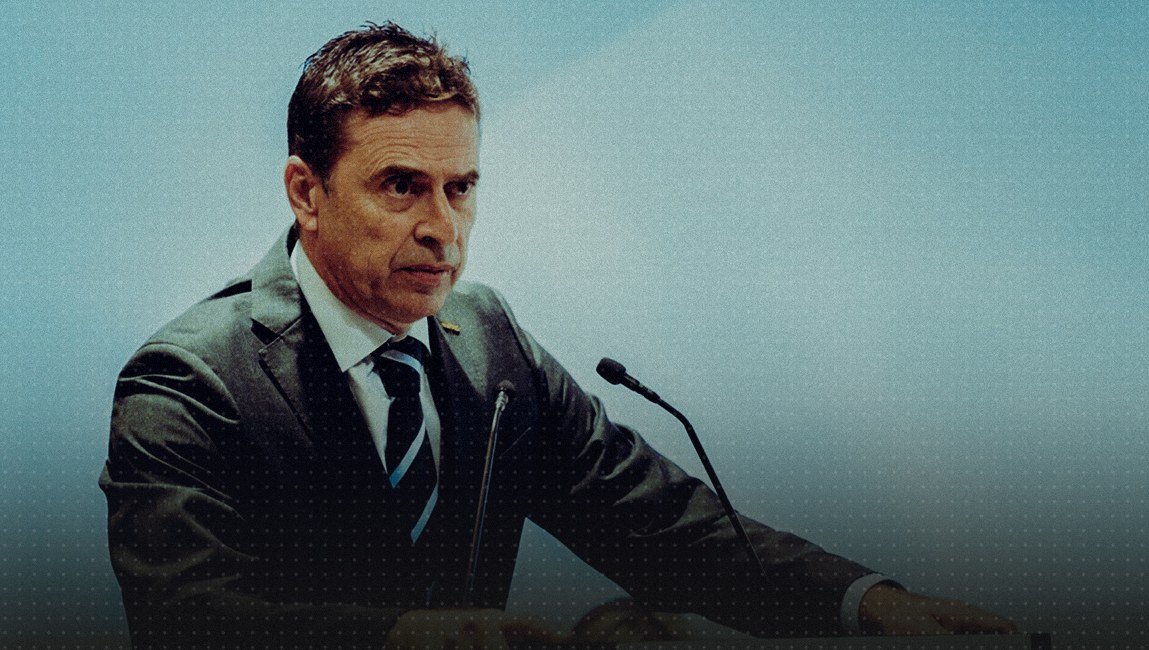
There have been plenty of controversies around World Table Tennis and its incompetent decisions. However, the European Table Tennis Union has been on its run of questionable decisions.
European Table Tennis Union, known as ETTU, has been organizing different continental competitions for decades. From the European Championships to the Champions League, Europe Top 16, and others.
However, in recent years, during the presidency of Pedro Moura, ETTU has been on a consistent run of showing favoritism towards specific ideas and clubs that do not really benefit European table tennis development. One clear example is the German club TTC Neu-Ulm and it’s buying into the Champions League. This club appeared out of nowhere back in 2019 and without winning any accolades in the German Bundesliga, got its place in the Champions League. A similar situation has been this season, since Nimes/Montpellier club hasn’t won any French Pro A League accolades, yet, it got a place in the Champions League. Basically, if someone has a lot of money, you can simply found a new club, skip all the national league hierarchy, and get right into the elite of European club table tennis. The Champions League is for champions just on paper.
It has given a clear impression that ETTU doesn’t have any backbone or respect towards the tradition of the tournaments it organizes. As soon as financial benefits are on the horizon, there are no issues to change the rules of the game and let the money talk. If we look before Moura’s presidency, ETTU had the potential to be in a very good place financially.
A few years before the events in Ukraine started was a very lucrative and promising time for ETTU, since the aide to the president of Russian President Vladimir Putin – Igor Levitin was elected as an ETTU President in September 2020. Soon after, ETTU got a sponsorship from the largest Russian company – Gazprom. After the conflict in Ukraine began, Levitin resigned from his position, but the ETTU board remained pretty much the same.
Since getting sponsorship from Gazprom or any other major Russian companies was no longer a possibility, ETTU had to find ways, how to make some extra money. And why look too far, if you can simply copy-cat the WTT Youth Contenders and present the Europe Youth Series? However, this Euro-centric tournament looks simply like another cash-grab scheme in table tennis, similar to WTT Feeder tournaments.

Outside of financial gains for ETTU, there are no real benefits for the young European players in taking part in their Youth Series. No World Ranking points, overpriced hospitality fees, and much lower competition level, compared to the WTT Youth Contenders. The international table tennis schedule has been kind of a mess since the WTT appeared and ETTU seems to add even more chaos to it.
Another thing that ETTU seems to borrow from WTT is the conflict of interests and allowing officials to keep the leading positions in two organizations at the same time. It shows a lack of professionalism in an organization and creates a sense of bias and pushing forward specific interests, rather than working for the common goals. In the World Table Tennis case, we have seen this with Liu Guoliang, who is at the top of both – WTT & CTTA. And without a doubt, holding a high position in WTT can help Guoliang to push different initiatives in favor of his home country.
ETTU has an interesting example among its executive board members, who have clearly pushed some interests in favor of her country. If you look at the executive board’s list, you can see Ina Jozepsone among the vice presidents of ETTU. She is also president of the Latvian Table Tennis Federation. Since Jozepsone has been the vice president of ETTU, Latvia has suddenly gained some favors from ETTU. For example, the Riga City Council Cup has been added among the youth tournaments that receive European ranking points, alongside ETTU’s Youth Series. Recently, the 2027 European Veterans Championships were awarded to Latvia. And for those, who might not know – veterans championships are one of the most lucrative and desired tournaments for the organizers in table tennis. Thousands of people attend these tournaments, and one such tournament can generate more revenue (€55 160 in 2023) for ETTU than the Champions League (€30 000) and Europe Top 16 (€28 000) combined.
Why does a country with very bleak table tennis traditions get a chance to organize such a lucrative tournament? In the past 30 years, Latvian table tennis has produced only one world-class player – Matīss Burģis. At this peak, he was ranked 100th in the World Rankings, and he participated in the 2012 Olympic Games in London. However, Burģis has retired from the international arena since 2017, and since then, Latvia has been a below-average team on the European level. It does not make much sense to reward a country with zero success on the continental level and that does not have even a single professional table tennis athlete – with such opportunities. It’s also interesting what Latvian table tennis achievements Ina Jozepsone could present to get elected as a vice president of ETTU? Latvian table tennis level is behind its Baltic neighbors – Estonia and Lithuania, however, you don’t see their table tennis officials getting any high-rank ETTU positions or opportunities to organize major tournaments.
However, conflicts of interest and nepotism are common things in table tennis. Since it’s a niche sport, such examples do not get much public attention. ETTU’s tournaments do not have popularity within the broader audiences for anyone actually to make a buzz about it.
The same can be said about ETTU’s partnership with TT Cup. It’s one truly shady organization that has partnerships with several table tennis institutions and players, but it’s still unclear what kind of partnership could it offer for ETTU? Recently, there was an announcement about Europe Top 16 partnership. However, outside of this word salad about cheering and supporting, there are no specifics of what this support is going to be. A promotion on their website and social media? Paid sponsorship? Broadcasting? Zero clarity does not add any value to the overall image of ETTU.
In conclusion, whether it’s WTT, ETTU, or any other table tennis organization, it rarely looks good, professional, and fully invested in the development of this sport. Niche sports representatives have to work ten times harder to make it relevant for broader audiences, and unfortunately, selfish interests and biases often prevail and do no good for table tennis.
Don’t miss out the news from Table Tennis Media, subscribing to our free newsletter and explore the premium content on our Patreon.
-
Liang Jingkun is new leader of Team China for the 2025 World Table Tennis Championships

This year brought some major changes in table tennis. Chinese table tennis legends Ma Long and Fan Zhendong retired from the international arena, leaving an open question – who gonna lead Team China in 2025?
The obvious answer would be – Wang Chuqin or Lin Shidong. One is already a very experienced player and World Ranking leader, while the other is a rising star with great potential. However, the true leader of Team China before the 2025 World Table Tennis Championships, could be the one, who always has remained in the shadows – Liang Jingkun. Let me explain to you, why.
Liang Jingkun is a synonym for consistency. He has never been the fan favorite or poster boy for Team China, like, for example, Wang Chuqin. He has always been that third or fourth option on the Chinese roster. However, on the biggest stage, like the World Championships, Liang Jingkun has been one of the most consistent players in table tennis history: three consecutive World Championships, and three bronze medals in the singles event. Only 18 players in history have been able to achieve such a feat. Liang Jingkun is one of them.
Many all-time greats haven’t been able to have such a consistent run on the biggest stage. The German legend, Timo Boll won just two bronze medals in his long and successful career. Xu Xin also reached the semi-final stage twice. Another former World Ranking leader, Dimitrij Ovtcharov, has never won a medal in the singles event of the World Championships. So in this regard, Liang Jingkun has surpassed some truly respectable names, and he has a chance to make the fourth consecutive run.
He was a late bloomer, always behind the more talented and accomplished teammates, like Ma Long, Xu Xin, and Fan Zhendong. Slowly, but surely, Liang Jingkun took every chance he got at the World Championships and made the best out of it. In every one of his runs, Liang Jingkun lost to the eventual champion.
Let’s look back at these journeys. In 2019, he eliminated Fan Zhendong in the Round of 16, got past Koki Niwa in the quarterfinals, and was stopped by Ma Long in the semifinals. In 2021, he won against Hugo Calderano in the quarterfinals and a loss to Fan Zhendong stopped Liang Jingkun from reaching the final. Draw wasn’t really in his favor, since the other semifinal featured Truls Moregardh and Timo Boll. And finally, in 2023, he got wins over Darko Jorgic and Tomokazu Harimoto on the way to the semifinal, where it was once again Fan Zhendong standing in the way.
As you can see, the consistency has always been there. And from the current Team China roster, you cannot say the same about others. Wang Chuqin has only one World Championships medal on his resume, and we all remember his exit at the 2024 Olympics in Paris. Lin Shidong has progressed a lot, but the 2025 World Championships will be his first experience in the singles event.
Of course, these two gonna be the frontrunners and potential favorites of the World Championships in the eyes of the majority. However, you cannot have confidence in their success, like it was before when Ma Long and Fan Zhendong were playing. Liang Jingkun might not have the potential to win it all, but at the same time, he’s the most experienced and reliable Chinese player right now. He is still at the peak of his powers, and his experience can play a major role in a decisive moment.
Hopefully, the Chinese international will have a successful year, and in the current circumstances, he will earn more respect and attention from the fans. 2025 Singapore Smash was a good example of fan favoritism. It was quite disappointing to see how fans were cheering for Wang Chuqin, whenever he won the point, and how they went completely silent when Liang Jingkun had a successful rally. He’s an all-time great player, fans should put some respect on his name. He deserves better.
Don’t miss out the news from Table Tennis Media, subscribing to our free newsletter and explore the premium content on our Patreon.
-
Stanislav Gomozkov – the father of the modern backhand
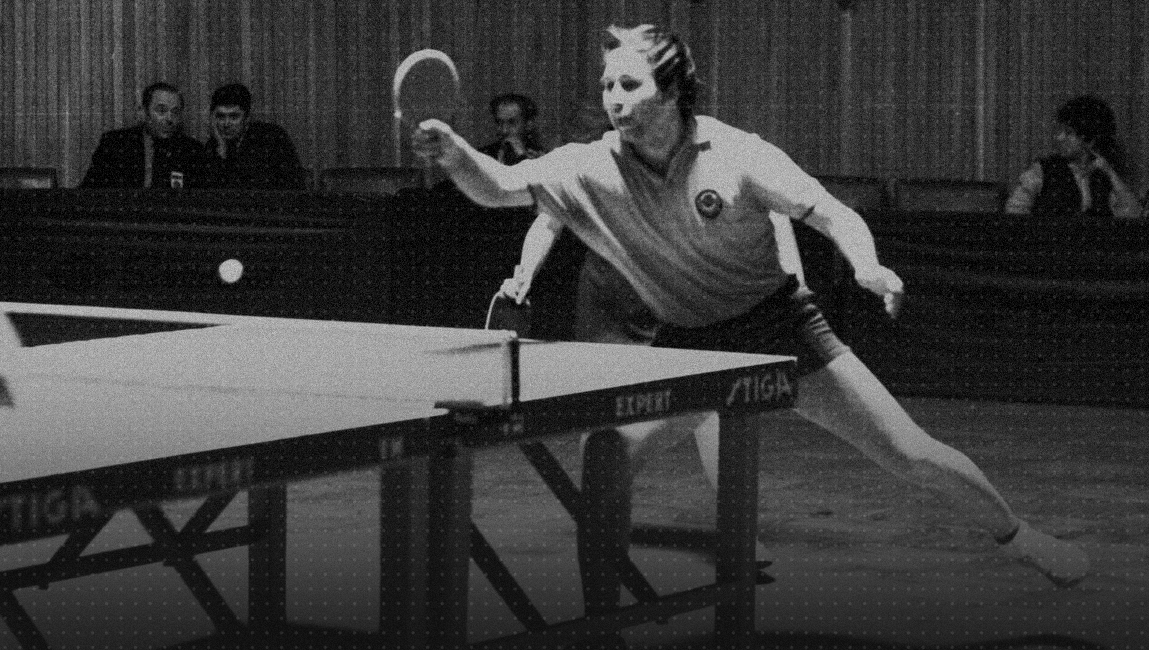
As with every sport, table tennis has seen the evolution of its athletes throughout the years. Eventually, it was polished into this concept of modern table tennis – a highly athletic and technical sport. Every element of table tennis had an athlete who at one point, gave a foundation for the development of a modern-day forehand loop, modern-day service and so on.
The Soviet international Stanislav Gomozkov was the father of the modern backhand. One of the leading European players of the 60s and 70s era, Gomozkov had the finest backhand in the World in his prime. He had a quick, sharp backhand stroke that earned him a lot of points.
Born in 1948, the future World and European champion got his first major accolade in 1965, winning the Soviet National Championships. In the final, Gomozkov was a clear underdog, playing against the more experienced Soviet international, Zigmunds Kalniņš. The outcome surprised many, and this title was the first step into more than a decade of a World-class career.
Up until 1977, Gomozkov was consistently a Top 20 player, reaching as high as 5th place in the World Rankings in 1967. For a decade, he was listed among the favorites of every major tournament in table tennis, often getting wins against some of the best players in the World. In doubles, Gomozkov was even better, eventually becoming one of the best doubles players of all time.
And it is no exaggeration. Together with Anatoly Amelin, Gomozkov won the silver at the 1967 World Championships, and a bronze medal at the 1969 World Championships. In 1975, he became a World champion in the mixed doubles event. Up until the fall of the Soviet Union, Gomozkov remained the only Soviet player to win a gold medal at the World Championships.
He also achieved an impressive record at the European Championships that still remains unbeaten. From 1968 to 1974, Gomozkov won four consecutive gold medals in the mixed doubles event. Together with Zoja Rudnova, they completely dominated this event. It’s a record that is very unlikely to be broken in the foreseeable future.
AdvertisementsAlthough Gomozkov had a solid forehand, the backhand was his trademark throughout all of his career. It was a solid prototype of the modern version. Not that polished yet, but already a great example to present it to the young players, as something to study and emulate. The Hungarian legend Tibor Klampar took the torch in the 70s and polished the backhand technique into an even more fast and efficient version. His backhand was later studied by such all-time greats, as Jan-Ove Waldner.
Eventually, the backhand and other table tennis elements did evolve to the modern standard. But table tennis fans shouldn’t underestimate the impact of players, like Gomozkov. The highlights from the 60s and 70s era are limited, and those might not look that impressive from the modern-day perspective. However, at the time young players were taking notes. Information was much more limited, and every chance to see a World-class athlete playing was very valuable.
Gomozkov’s playing style was quite uncomfortable for many of the leading players at the time. He had some memorable wins against Swedish table tennis legends. For example, at the 1973 World Championships in Sarajevo, Gomozkov eliminated the reigning World champion and World Ranking leader, Stellan Bengtsson. But this was just one of many impressive wins of his career.
Gomozkov peaked early and retired relatively young, at the age of 30. However, it was more of a forced retirement, since the Soviet team was keen to give a chance for the new generation of players. He got offered a coaching role instead. In the modern-day environment, he probably could’ve played for 5-6 years more, but the Soviet sports system was strict. If the management decides to retire someone, there is nothing an athlete can do.
The athletes from the Soviet Union did not have freedom, like their Western counterparts. They could participate in international tournaments only as long as they were members of the national team. Playing for the clubs, and earning money somewhere abroad was impossible to do.
Nevertheless, Stanislav Gomozkov retired as the greatest Soviet player ever. World-class career, numerous accolades, and some records that will never be broken. He impacted the evolution of table tennis and had a career worthy of remembering.
Don’t miss out the news from Table Tennis Media, subscribing to our free newsletter and explore the premium content on our Patreon.


 Table Tennis Media