-
National champions in table tennis 2026
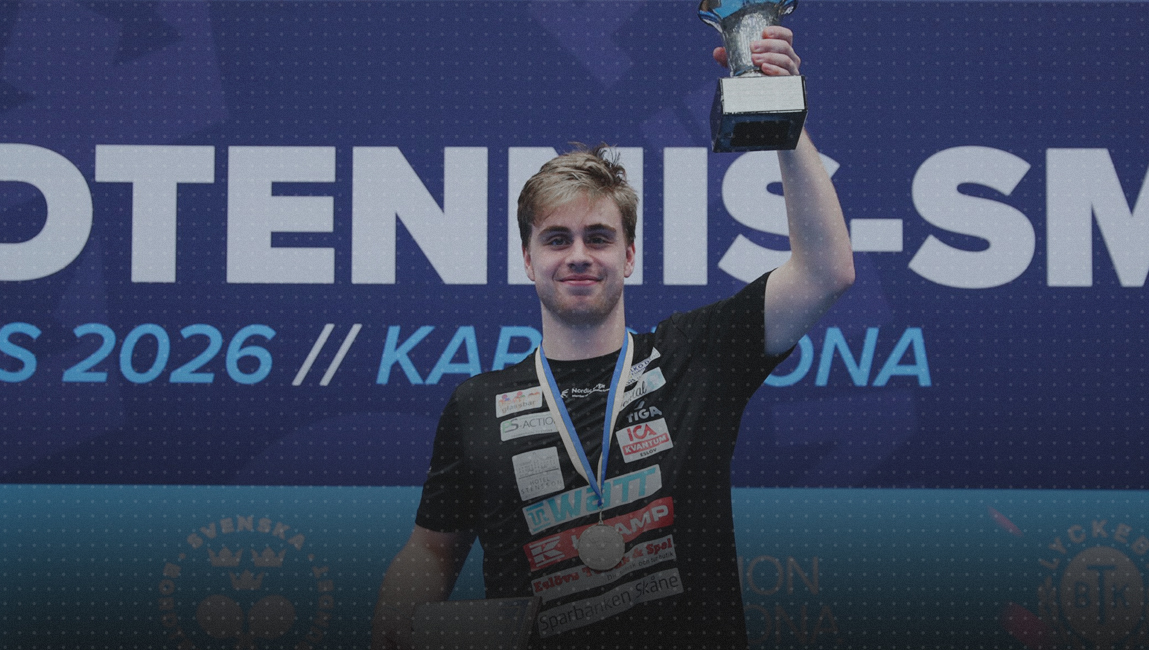
Table Tennis Media presents an overview of the medal winners at the national championships across the European countries of the 2026 edition. Some competitions brought surprises, while in many countries, the winners were the initial favorites of the tournament.
 BOSNIA & HERZEGOVINA
 Benjamin Zijadic
 Edin Konjic
 Dario Pejic Kenan Zahirovic
DOUBLES
MIXED D.
X
X CROATIA Ivan Hencl Borna Petek Ivor Ban Leon Benko
DOUBLES
X
XMIXED D.
X NETHERLANDS Gabrielius Camara Barry Berben Milo de Boer Remi Chambet-Weil
DOUBLES
XMIXED D.
X SWITZERLAND Elias Hardmeier Elia Schmid Yoan Rebetez Noe Keusch
DOUBLES
X
X
XMIXED D.
X
X
XDon’t miss out the news from Table Tennis Media, subscribing to our free newsletter and explore the premium content on our Patreon.
-
Sora Matsushima does it again! The 18-year-old wins his second consecutive All Japan Championships title

All the finest names of Japanese table tennis once again met in Tokyo to find out the new champion of the All Japan Championships (2026年全日本卓球選手権大会). Many fans were eager to see whether Tomokazu Harimoto would be able to make his way to the final and get revenge for the 2025 loss to Sora Matsushima.
Interestingly, the semi-finals stage of this year’s tournament was the same as in 2025, featuring Sora Matsushima, Hiroto Shinozuka, Yuma Tanigaki, and Tomokazu Harimoto. The same pairs, same eventual finalists, and champion.
The main game of the tournament was the semi-final between Matsushima and Harimoto. Unlike the previous year, when Matsushima won relatively easily 4-1, this year’s meeting turned out into a seven-set thriller. Both players played at the best level of their abilities, turning this semi-final match-up into a long and exciting spectacle for the local fans. The score constantly changed in favor of Matsushima and Harimoto.
AdvertisementsEventually, the 18-year-old Matsushima won the seventh set 11-9 and secured his place in the final that turned out to be as one-sided as the year before. Hiroto Shinozuka did not cause much headache for Matsushima, and he confidently won his second consecutive singles title.
In recent years, the All Japan Championships have turned into a real challenge for Harimoto. His performances give the impression that the international opponents are less challenging to face than the local ones. Which, of course, is a good thing for Team Japan as a whole. There is a strong internal battle for the leader’s position in the national team, and this can help make progress in the long run.
With Harimoto already being a seasoned veteran despite his young age, and Matsushima earning the experience and confidence internationally, it will be interesting to see how Team Japan will face Team China at the 2026 World Team Table Tennis Championships. Lin Shidong has been struggling in the past months, and Liang Jingkun is still recovering from his back injury. While Team China might solve these struggles by the WTTC, the intrigue is definitely increasing.
Overall, the Japanese table tennis seems to be in a good place at the moment. The Japanese T-League has been steadily developing and giving a regular high-quality playing experience for the upcoming local talents, and the rise of Sora Matsushima is a result of that.
2026 ALL JAPAN CHAMPIONSHIPS RESULTS
FINAL
 Sora Matsushima
4-0 vs. Hiroto Shinozuka (11-8, 11-4, 11-4, 12-10)
1/2 FINALS Sora Matsushima 
4-3 vs. Tomokazu Harimoto (13-11, 8-11, 8-11, 11-8, 14-12, 9-11, 11-9) Hiroto Shinozuka
4-1 vs. Yuma Tanigaki (12-10, 13-11, 11-5, 4-11, 11-5)
1/4 FINALS Tomokazu Harimoto
4-3 vs. Yuto Kizukuri (11-4, 8-11, 10-12, 11-7, 11-9, 8-11, 11-8) Sora Matsushima
4-1 vs. Maharu Yoshimura (11-13, 12-10, 14-12, 13-11, 11-6) Hiroto Shinozuka
4-2 vs. Yukiya Uda (11-4, 6-11, 11-9, 11-9, 6-11, 13-11) Yuma Tanigaki
4-2 vs. Ryuusei Kawakami (11-3, 11-13, 5-11, 12-10, 13-11, 11-9)Don’t miss out the news from Table Tennis Media, subscribing to our free newsletter and explore the premium content on our Patreon.
-
2025 Review. World Table Tennis shows progress, as ITTF and ETTU get involved in scandals and discrimination

As every year, 2025 was no different in terms of performances by the international table tennis stars. They bring quality action on a yearly basis. The organizers and decision-makers in table tennis largely remain in the shadows and don’t get much attention. However, 2025 was a year of scandals, conflicts of interests and incompetence by some of the major table tennis organizations.
In recent years, the World Table Tennis received plenty of criticism from us and many table tennis fans. The retirement of Fan Zhendong created a buzz around the silly rules WTT implemented against international players. The situation further fueled debates within the table tennis community about the necessary changes to make players’ lives easier.
WTT did the right thing, listening to the complaints, and in February, they removed the mandatory participation requirement at all Grand Smash events and introduced direct entry for Olympic champions. There is still an issue about the absurd World Rankings system that massively overrates the meaning and value of WTT tournaments versus the most important table tennis competitions, like the Olympic Games, World, European, and Asian Championships. The problems are still out there, but at least WTT has shown some progress and interest in public opinion.
ITTF and ETTU, on the contrary, brought some absurd incompetence and turned the ITTF Presidential election into a pathetic circus that awarded Petra Sörling with another presidential term. It was truly a disgrace for table tennis. The elections were clearly rigged and Qatar’s complaints were fair. If Sörling truly cared about table tennis development, and not just keeping herself in power, the ITTF could simply arrange another voting session the same day. What’s the issue with doing that?
AdvertisementsAnd why not make the voting results publicly available, so the table tennis community can see which associations are supporting one or another candidate? These officials, like Sörling, love to mumble around about transparency, equality, and other politically-motivated nonsense, yet they create a bad image for table tennis in a selfish pursuit of power and opportunities. After such a scandal, Sörling should’ve either asked for a new vote or simply removed herself from the candidate list. A person with morals and ethics would do this. Seems that Sörling lacks these characteristics. As ITTF president, she has been mediocre, so it wouldn’t be a big loss if she lost the election.
The clear champion among the worst table tennis organizations, however, is the European Table Tennis Union. Its vice-president, Ina Jozepsone, has been running her local table tennis federation as some sort of family business, also showing awful financial results during her presidency. She and ETTU president, Pedro Moura, have been behind ETTU’s new discriminatory policies.
You see, whenever a sports organization begins to play politics, it’s a clear sign that this organization is struggling. The modern-day liberal pseudo-equality policies work well to cover up the actual problems. You don’t need to look far for the examples. The NBA is a great example. At one point, it became obsessively political, biased, and fans were sick of virtue signalling. As a result, the NBA is in a deep crisis, having some of the worst TV ratings in its history.
ETTU has decided to be the social justice warriors of table tennis, as now they have a Gender Equality committee. As if there have been any problems with equality in table tennis. It’s hard to find a more open sport for anyone than table tennis. But seems there are some real problems we’re unaware of… Or, it’s just virtue signalling, most likely, initiated by Jozepsone, to gain some extra popularity points in those inner circles of ETTU, ITTF, and WTT.
The worst part – ETTU has actually implemented a discriminatory policy that goes against any common sense and the meaning of equality. Here’s an example. As you can see in this prospectus of an ETTU-organized tournament, they have the following option:
ETTU will cover the full accommodation cost for one female coach from member associations in categories 3 and 4. Additionally, ETTU will cover 50% of the accommodation costs for one female coach from associations in categories 1 and 2.
So ETTU is all-in for equality, yet where is the equality in this regard? Why such favoritism towards female coaches? Are their male counterparts any less deserving of seeing their expenses being covered?
Aside from being hypocritical, ETTU also might soon fuel that woke gender madness with transgender and non-binary policies because “all associations expressed interest in the work currently being developed by Table Tennis England, which is undergoing consultation and review.”
A truly important question and issues for table tennis, right? But all jokes aside, populism rarely brings any good outcome. With Moura and Jozepsone leading ETTU in an unknown direction, the organization has been turned into a laughing stock. Table tennis popularity remains low; it’s still a niche sport in Europe, but these muppets can’t figure out anything better than implementing some rubbish, discriminatory policies. And don’t forget how they love to profit from youth tournaments. But what else can you expect from a collective of failed managers…
Don’t miss out the news from Table Tennis Media, subscribing to our free newsletter and explore the premium content on our Patreon.
-
Shandong Weiqiao wins its fourth Chinese Super League title in a dominant fashion

The finals stage of the 2025 Chinese Super League did not bring any surprises. It was rather a disappointing ending to the season, since the battle for title turned out to be a one-sided match-up. Shandong Weiqiao left no chance for the opposition and confidently ended the season with a 3-0 win.
Unfortunately, the fans did not see some of the teams at full power. Huangshi played both of their games without Lin Shidong, while Shanghai Zhongxing entered the semi-final without their renowned veterans – Xu Xin and Fan Zhendong.
The reigning champions, Shandong Weiqiao, presented their best line-up, consisting of Wang Chuqin, Liang Jingkun, and Lin Yun-ju. This trio was almost unstoppable during the regular season, losing just one out of sixteen games.
The situation was similar in the final stage. Out of six match-ups in the semi-final and final, Shandong Weiqiao players lost just one set. Xiang Peng was able to win one against Wang Chuqin. In all other games, Shandong’s players cruised past their opponents in easy mode. Their roster was simply too good.
Because of this, the season ending remains kind of a “what-if” story. Shanghai could’ve been a worthy challenger for the title if Fan Zhendong had played in Nanjing. He ended the regular season without a single loss, and he has been in really good form this year. He definitely could win a game or two for his team in the semi-final.
TRENDING ARTICLE
The Shandong Weiqiao has been on a successful run during the past decade. They have won four league titles and missed the medals just once. With the current roster, Shandong could add at least a few more titles in the upcoming season.
The foreign players did not have much success. Sora Matsushima won eight out of sixteen games, while Izaac Quek lost all eight of his singles match-ups. It will be interesting to see whether any of the Chinese teams will invite any of the top European players for the 2026 season. The last European to do it was Truls Moregardh in the 2023 CTTSL season.
2025 CHINESE SUPER LEAGUE RESULTS & STATISTICS
FINAL
3 – Shandong Weiqiao
0 – Huangshi TTC  Liang Jingkun/Lin Yun-ju – Liu Guancheng/Xue Fei 3-0 (11-1, 11-4, 11-5) Wang Chuqin – Xiang Peng 3-1 (11-7, 7-11, 11-7, 11-8) Lin Yun-ju – Liu Guancheng 3-0 (11-2, 11-7, 11-4)
1/2 FINAL
3 – Shandong Weiqiao
0 – Shanghai Zhongxing Liang Jingkun/Lin Yun-ju – Zhou Kai/Sun Zheng 3-0 (11-8, 11-3, 11-7) Wang Chuqin – Zhao Zihao 3-0 (11-9, 11-6, 11-5) Lin Yun-ju – Sun Zheng 3-0 (11-9, 11-3, 11-3)
3 – Huangshi TTC
2 – Shantou Mingrun Hu Chang/Xue Fei – Lin Gaoyuan/Xu Haidong 0-3 (4-11, 5-11, 10-12) Xiang Peng – Chen Yuanyu 3-1 (11-6, 11-6, 5-11, 11-6) Hu Chang – Lin Gaoyuan 0-3 (4-11, 11-13, 4-11) Xiang Peng – Xu Haidong 3-2 (11-9, 7-11, 11-8, 8-11, 11-6) Xue Fei – Chen Yuanyu 3-1 (11-6, 11-8, 4-11, 11-6)Don’t miss out the news from Table Tennis Media, subscribing to our free newsletter and explore the premium content on our Patreon.
-
Wang Chuqin – The Player of the Year 2025
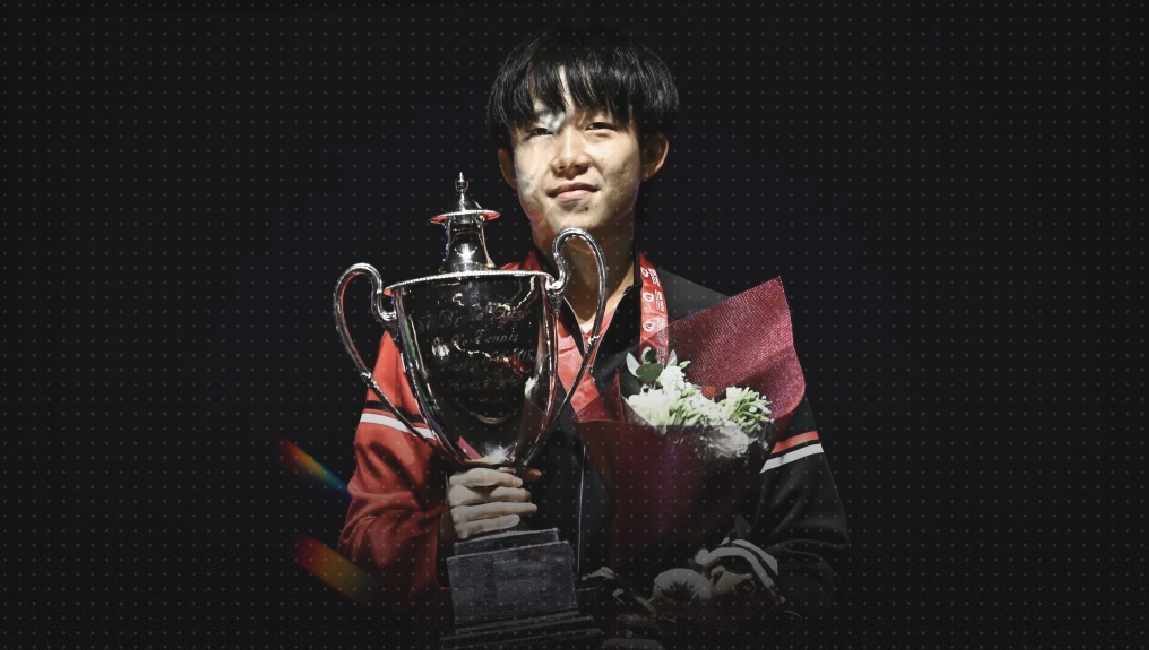
This year brought plenty of memorable runs at the World Table Tennis Championships, World Cup, and other major competitions. The most consistent performer throughout the year was the Chinese international and the reigning World champion, Wang Chuqin.
The 25-year-old did not disappoint Team China fans at the WTTC, winning the gold medal in the singles event and leaving no chance for Hugo Calderano. This title crowned Wang Chuqin as the new leader of Team China. He proved that the coaching staff can rely on him in the most important tournament of the year.

Wang Chuqin rarely lost any games, and he wasn’t as dominant as Wang Liqin, Ma Long, or Fan Zhendong during their prime. Still, he won the most important tournament of the year. Losses in the World Cup or WTT Cup Finals are not that crucial. The World champion’s title overshadows everything.
Among honorable mentions, Hugo Calderano definitely deserves recognition for the most successful year in his career. His World Cup win in Macao ignited plenty of interest prior to the World Championships in Qatar. The 29-year-old Brazilian did not disappoint, and he was able to reach the final. After years of missing the medal at the major tournaments, Calderano finally wrote his name into the list of table tennis legends.
Truls Möregårdh and Liang Jingkun were among the finest performers of 2025. The Swede was able to win another medal at the World Championships, and he is slowly cementing his legacy to reach the status of a legend that many of his predecessors had.
Liang Jingkun began this year already in a legendary status for his past achievements, but his fourth bronze in the singles event at the World Championships once again proved his underrated greatness. Liang Jingkun is one of eight players in table tennis history who have won a medal in the singles event in four consecutive World Championships. That’s an incredibly difficult feat to achieve.
It will be interesting to see who will step up in 2026 and whether there will be any serious contender to challenge Team China in the most important competitions. Can Hugo Calderano continue his successful run, or 2025 will remain a one-hit wonder? Plenty of questions to be answered!
Don’t miss out the news from Table Tennis Media, subscribing to our free newsletter and explore the premium content on our Patreon.
-
Tomokazu Harimoto repeats his 2018 success, as Wang Chuqin withdraws from the WTT Cup Finals due to injury
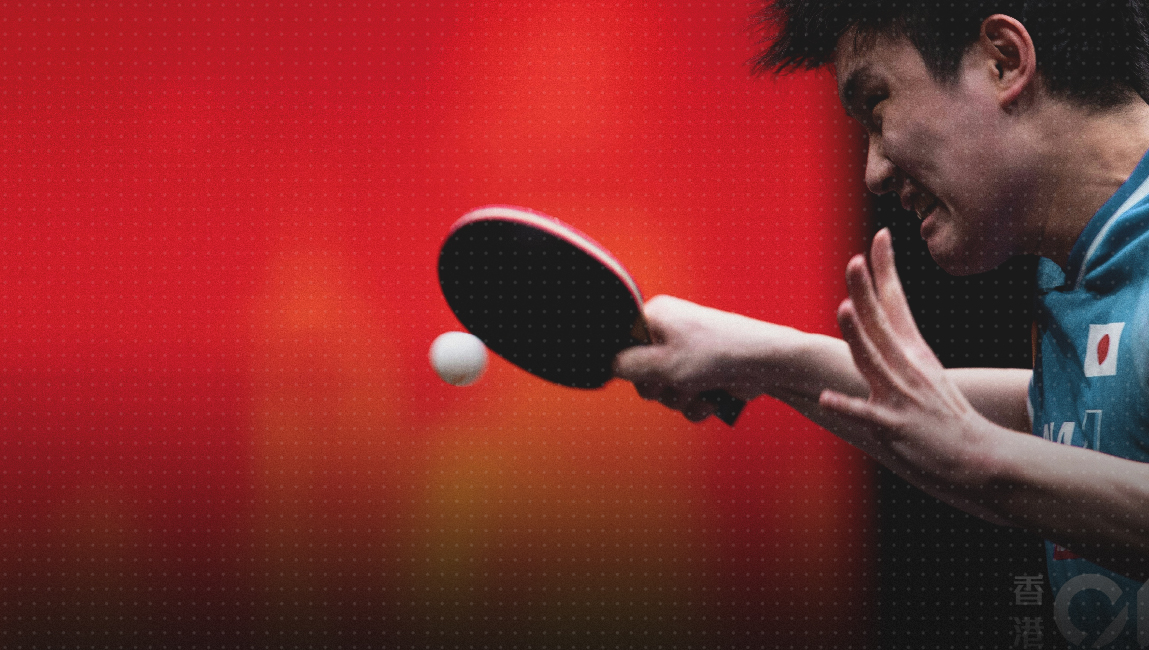
Hong Kong welcomed the top performers on the professional circuit in 2025. The players’ list featured the reigning World champion and a 3-time champion of this competition – Wang Chuqin.
The 25-year-old Chinese international has won a medal at every WTT Cup Finals since 2021. The 2025 edition was no exception. However, the injury ended his run in the 1/4 final, where Wang Chuqin was supposed to meet his Olympic nemesis, Truls Möregårdh.
While the individual match-ups brought plenty of excitement, there were no major upsets in Hong Kong. Three out of four top-ranked players made it to the semi-final stage. The only one who was knocked out in the early round was Hugo Calderano. All the other favourites found their way into the next round.
The road to the final for Truls Möregårdh and Tomokazu Harimoto was very different. The Swedish star got a relatively easy 4-1 win in the Round of 16 against the Dane – Anders Lind, who had a debut at this tournament. In the 1/4 final, he got another solid win against Lin Yun-Ju (4-2).
The fans were eager to see the Swede take on the reigning World champion, Wang Chuqin. Unfortunately, the leader of Team China was forced to withdraw from the competition due to injury. By his own words, “the back problem was an issue”, and after a warm-up us session, the decision about withdrawal was made. Such a cautious approach is understandable. The finals of the 2025 Chinese Super League are coming up, and the local fans will definitely expect Wang Chuqin to be ready to play.
TREDING ARTICLE
Harimoto had a much more exhausting path to the final. He had to put in some serious effort to get past the Frenchman, Simon Gauzy, in the Round of 16. In the 1/4 final, there was another Japan vs. France duel coming up.
Felix Lebrun fought well and took the game to the decisive seventh set. It turned out to be a nerve-wrecking for both players. Eventually, Harimoto won the decider 11-9 and advanced to the next round. And it was again a fine spectacle for the fans at the arena. Harimoto faced Lin Shidong in another exhausting 7-set showdown. You can only admire the physical and mental state of Team Japan’s leader in this tournament. Whenever there was a tough challenge ahead, Harimoto succeeded. Lin Shidong had some spectacular plays, but he failed to win the points in the decisive moments.
Against Möregårdh, Harimoto got an early lead, and he kept himself ahead of the Swedish international up until the decisive sixth set, when the Japanese concluded the tournament with an 11-2 win.
Harimoto won his first World Tour Finals title back in 2018, when he was just 15 years old. Interestingly, now Harimoto is just 22 years old, but he’s already a seasoned veteran at such a young age. His victory in this tournament is well-deserved, and it will definitely lighten his mood after the incident he faced at the 2025 Mixed Team World Cup.
HARIMOTO’S WAY TO THE FINAL
ROUND OF 16
4-2 vs. Simon Gauzy (5-11, 11-5, 11-9, 5-11, 11-8, 11-7)
1/4 FINAL
4-3 vs. Felix Lebrun (12-14, 11-8, 12-10, 11-3, 8-11, 7-11, 11-9)
1/2 FINAL
4-3 vs. Lin Shidong (12-10, 11-4, 10-12, 10-12, 11-6, 7-11, 11-8)
FINAL
4-2 vs. Truls Möregårdh (11-8, 5-11, 11-8, 10-12, 14-12, 11-2)
Don’t miss out the news from Table Tennis Media, subscribing to our free newsletter and explore the premium content on our Patreon.
-
How ETTU rewards failed management. The Ina Jozepsone case

The story about the conflict of interest involving ETTU vice-president Ina Jozepsone caught the attention of a leading news outlet in Latvia. And for a reason. The Latvian Table Tennis Federation and European Table Tennis Union seem to have lost touch with reality.
Imagine a scenario in which a person gets a CEO position in a company and, year after year, this person presents losses in the annual financial report. Normally, such a CEO would either lose his job or be relegated to some minor role in the company. But what does ETTU do in a similar situation? It promotes a failed CEO to a higher position… Sounds absurd, yet it’s the harsh reality of European table tennis.
But let’s look at the numbers, so it’s not just a baseless claim. Thanks to our Latvian colleagues, we got a translation of the annual financial audits of the Latvian Table Tennis Federation (LTTF) and some other publicly available documentation related to this topic.
THE LATVIAN TABLE TENNIS FEDERATION’S FINANCES DURING JOZEPSONE’S PRESIDENCY

Ina Jozepsone has been a part of the Latvian Federation since 2000. In 2017, she was elected as the president of this federation, and you can see that LTTF is largely living off the Latvian government funds, or simply, the Latvian taxpayers’ money. Since Jozepsone became the president of LTTF, the government funds have made 41-75% of the federation’s budget, depending on the year. However, LTTF during her presidency has been awful in terms of generating income. On average, in these 8 years, income has been just 11%, so the federation can get back barely 1/10 of what it needs to simply exist.
The interesting part is the dynamics of the LTTF budget since 2021, when Jozepsone became the ETTU vice-president. Suddenly, the Latvian table tennis saw an influx of government funds, and the income also rose. You can clearly see a correlation between the ETTU vice-presidency and the growing budget of LTTF.
At the same time, it’s completely unclear why ETTU members entrusted this position to a national federation president who has run it so poorly for years. Is this a subsidiary project by ETTU to somehow boost the income of local federations by promoting the poorest table tennis countries into the European power positions? The answer is unclear, but it looks like basically anyone can get into vice-presidency, no matter how poorly the person works on the local level. You don’t need any merits.
And if you think that table tennis in general lacks funding, you are right. But look at the next two infographics.
THE LITHUANIAN TABLE TENNIS ASSOCIATION’S FINANCES IN THE SAME TIME PERIOD

THE COMPARISON OF FEDERATION INCOMES – LATVIA VS. LITHUANIA

As you can see, the Latvian neighbor, Lithuania, has been generating 2.5 times more income during the same time period, and even during the pandemic, Lithuanians were able to generate a solid income. Lithuania’s worst-performing year wasn’t far off from Latvia’s best-performing, which was during Jozepsone’s ETTU vice-presidency.
So one country is able to generate several times bigger income even without the patronage of ETTU, but you won’t find any Lithuanian representatives among the ETTU board. The Lithuanian table tennis level is also higher than the Latvian, but somehow the official from the poorest-performing country out of the three Baltic states is now representing Europe on the global table tennis stage.
Where are the professionals who should be improving the position of table tennis among dozens of more popular sports in Europe? You don’t hire a manager from a small local company that isn’t self-sustainable to become a manager at Amazon or Google.
Unfortunately, table tennis lacks competent leaders who could elevate this game. World Table Tennis has at least made some sort of improvements. In a few instances, WTT listened to the criticism from the fans and media. It’s at least some sort of progress. ETTU looks like a laughing stock with its constant self-praise.
European table tennis overall seems to have a problem with these eternal officials, who spend decades as the board members of national federations. Like in the case of Jozepsone, who has been a part of the LTTF board for a quarter of a century, way too many people feel entitled to hold their influence forever. The problem of conflicts of interest is real, and it slows down the progress of table tennis as a sport.
Don’t miss out the news from Table Tennis Media, subscribing to our free newsletter and explore the premium content on our Patreon.
-
Team China wins the Mixed Team World Cup again, as Harimoto faced controversial moment
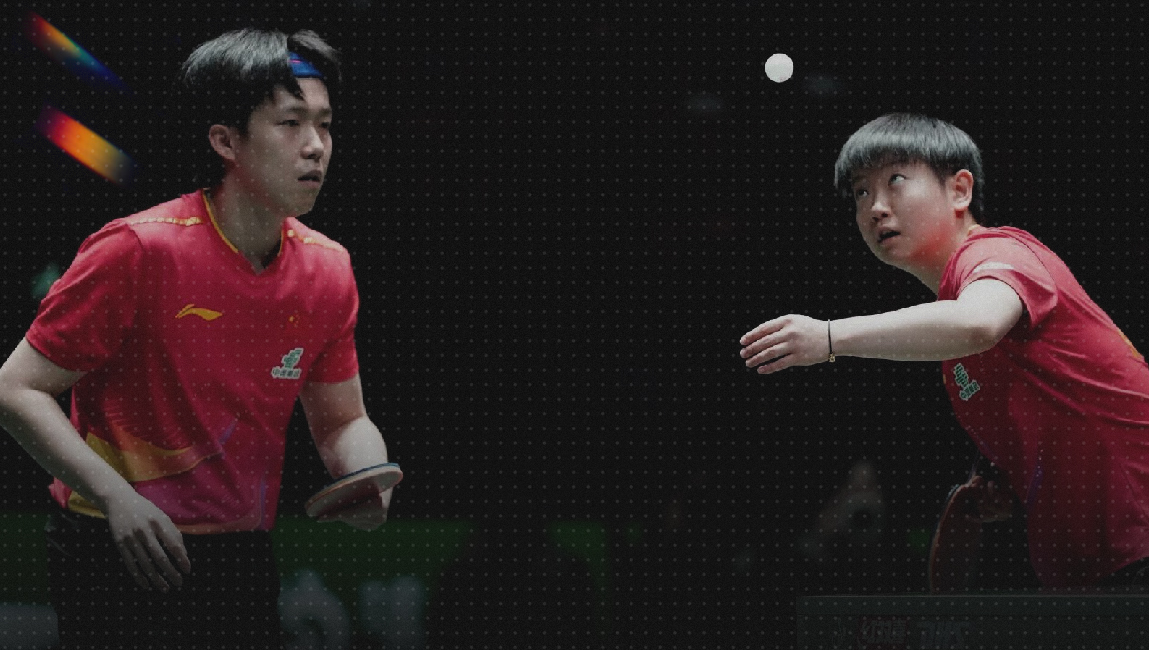
The 2025 ITTF Mixed Team World Cup concludes as expected. Team China adds another gold medal to its collection.
The reigning champions strike again! In front of the local fans in Chengdu, Team China claims another accolade, dominating the Mixed Team World Cup. In the final, the Chinese confidently overpowered Team Japan 8-1.
The tournament, however, saw some controversy and media criticism during the Stage 2 game between Japan and Korea. Tomokazu Harimoto’s name was mispronounced several times by the announcer, and the player hesitated to make his entry to the court. Harimoto was visibly frustrated, and afterwards, even the local Chinese media criticised the tournament organisers for disrespect towards the opposition’s star player.
Aside from this moment of controversy, the tournament overall brought plenty of quality table tennis action. Team China won their third consecutive title in this new format of mixed teams competition. They cruised past every opponent with confidence from Stage 1 up to the final match-up against Japan, rarely losing any of the matches.
Wang Chuqin had the biggest impact on Team China’s success, playing the most matches (12) and winning 27 out of 32 total sets. His 84% win rate isn’t elite, but it was good enough to bring the biggest amount of won sets to his team’s account. Lin Shidong was also crucial in China’s success, adding 25 won sets out of 30 total played.
The German team turned out to be the leading European side in this tournament, winning the bronze medals, thanks to the efforts of Dang Qiu, Benedikt Duda, and Patrick Franziska. Team Germany brought a well-balanced and experienced team to this competition. Ironically, the match for the bronze turned out to be much more interesting than the final.
They faced the Korean team, and the game had its ups and downs for both sides. Eventually, the score was 6-6 after the first four games, and the deciding match-up featured the women’s doubles players. Luckily for Team Germany, Sabine Winter and Nina Mittelham were able to turn the situation in their favor and get a decisive 2-1 victory against Lee Eun-hye and Choi Hyo-yoo.
Other leading European sides lacked that balance to get into the medal contention. Team France finished in fifth place, the Croatians were sixth, and Team Sweden had a disappointing run, losing all of their games in Stage 2, finishing in the 8th place. The absence of Truls Möregårdh lowered their chances of getting anywhere higher in the final rankings.
This tournament once again showed that in this format of the World Cup, the balanced roster is a key to success. A team might have two or even three excellent male players, but if their female counterparts cannot keep up with high expectations, the overall result gonna suffer a lot. Team France was a good example of this.
The Lebrun brothers had a solid run, bringing plenty of wins for the French. Felix Lebrun led his team with a 70% win rate, while Alexis Lebrun had a 61% win rate. However, the women’s side could provide significantly fewer wins for Team France. Only 36% by Prithika Pavade and 33% by Jia Nan-yuan.
Overall, the credit must be given to ITTF for this format of competition. The fact that every set matters really makes every player give 110% effort in every point. In singles competitions, one set sometimes does not change anything in a larger picture, but in this format, it can be crucial.
AdvertisementsRESULTS OF 2025 ITTF MIXED TEAM WORLD CUP
Don’t miss out the news from Table Tennis Media, subscribing to our free newsletter and explore the premium content on our Patreon.
-
Retired, but still the best in the World. Fan Zhendong claims the China National Games title
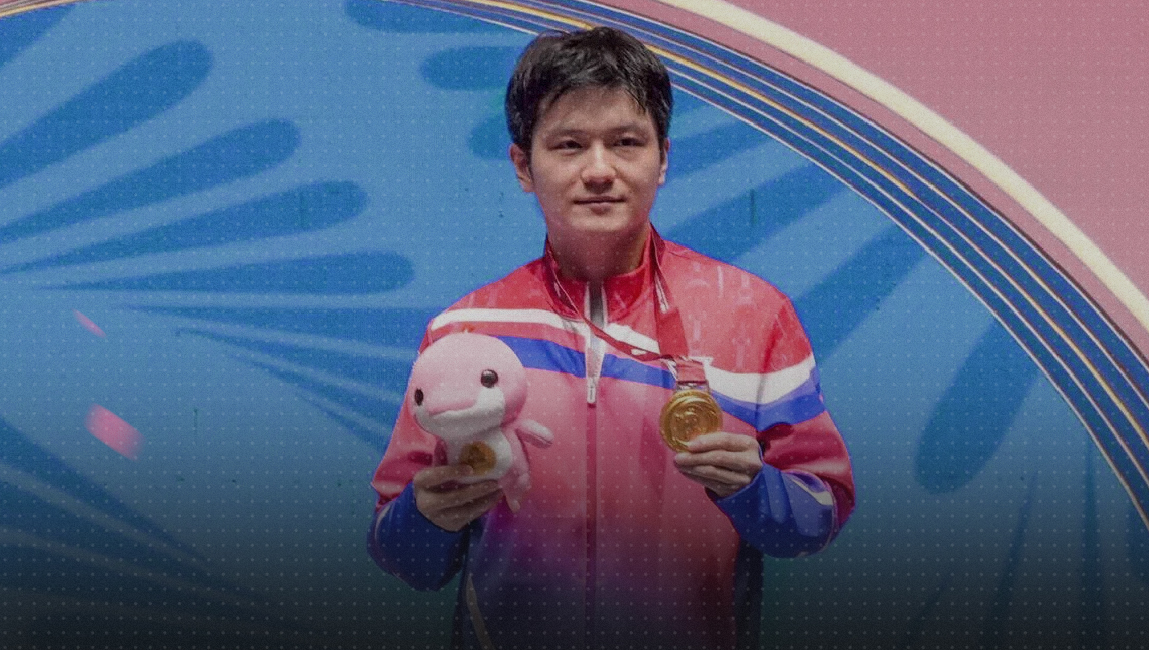
The 15th China National Games once again proved that the World Ranking in table tennis means nothing and WTT tournaments are massively overrated.
We all know that thanks to the absurd policies of World Table Tennis, the 2-time World champion in the singles event, Fan Zhendong, retired from international table tennis prior to this year, continuing his career only on club level in the Chinese Super League and the German Bundesliga.
The China National Games (CNG) is a very important tournament for the local players. Even the greatest player of all time, Ma Long, once said that it’s his dream to win this tournament. For the rest of the players, CNG is a great opportunity to display their talent and gain some extra attention from the national team coaches. If a player performs well in CNG, he will definitely get some chances outside China.
Fan Zhendong has nothing to prove anymore. Both individually and as a member of Team China, he won every possible tournament out there, and he will hold the position of one of the greatest players in history forever. Still, he has plenty of competitive drive left in him, and despite being out of the international competitions, Fan Zhendong remains the best player in the World. If someone beats two of the leading players in table tennis at the moment, what questions can there be about his current form?
AdvertisementsEven more impressive is the fact that Fan Zhendong did not even face much resistance from Wang Chuqin and Lin Shidong, confidently getting past both of them on the way to the title. In both the semi-final and the final, the reigning Olympic champion controlled the pace of the game, and his backhand was sensational. He made his opponents look pretty much hopeless.
Of course, this impressive performance raises plenty of discussion among the fans. What if… And this sentence could be continued with all kinds of statements. World Championships, WTT tour – would Fan Zhendong still be the main favorite to win the titles out there? After CNG, there should be no doubts. Of course, training and traveling with Team China, and being in a care-free mode in Germany are two completely different situations. Being back in the international action would take a bigger toll on his physical condition, and the potential injury risk would increase.
However, if you put Fan Zhendong in any specific short-term tournament, he can beat anyone and still win any of the major tournaments out there.
This success once again proves that it’s meaningless to make a big buzz about some WTT Smash or WTT Champions win. Some players might get those high rankings and then simply flop when the Olympic Games or the World Championships are on the horizon. Different levels of responsibility and preparation from the Team China side.
As we have highlighted several times, World Table Tennis has been awful in terms of creating a fair World Ranking system. If you can have three Australians in the Top 50, who cannot get past even the first round of any major tournament, then such a World Ranking is worth no more than a kid’s menu in McDonald’s…
Nevertheless, it was great to see Fan Zhendong battling the World’s best players once again. Who knows, if some injuries happen in Team China or any other bad luck before the next World Championships, maybe we will have a chance to see Fan Zhendong on the international scene once again. The top quality is still there.
FAN ZHENDONG’S ROAD TO GOLD
FINAL
4-1 vs. Lin Shidong (11-9, 8-11, 11-5, 11-3, 11-4)
1/2 FINAL
4-2 vs. Wang Chuqin (7-11, 11-9, 9-11, 11-7, 11-5, 11-7)
1/4 FINAL
4-0 vs. Sun Zheng (11-8, 11-3, 11-6, 11-8)
ROUND OF 16
4-1 vs. Xue Fei (11-4, 11-2, 11-5, 10-12, 11-6)
ROUND OF 32
4-0 vs. Zhou Yu (12-10, 11-6, 11-8, 11-6)Don’t miss out the news from Table Tennis Media, subscribing to our free newsletter and explore the premium content on our Patreon.
-
Team China brings back another gold from the Asian Championships
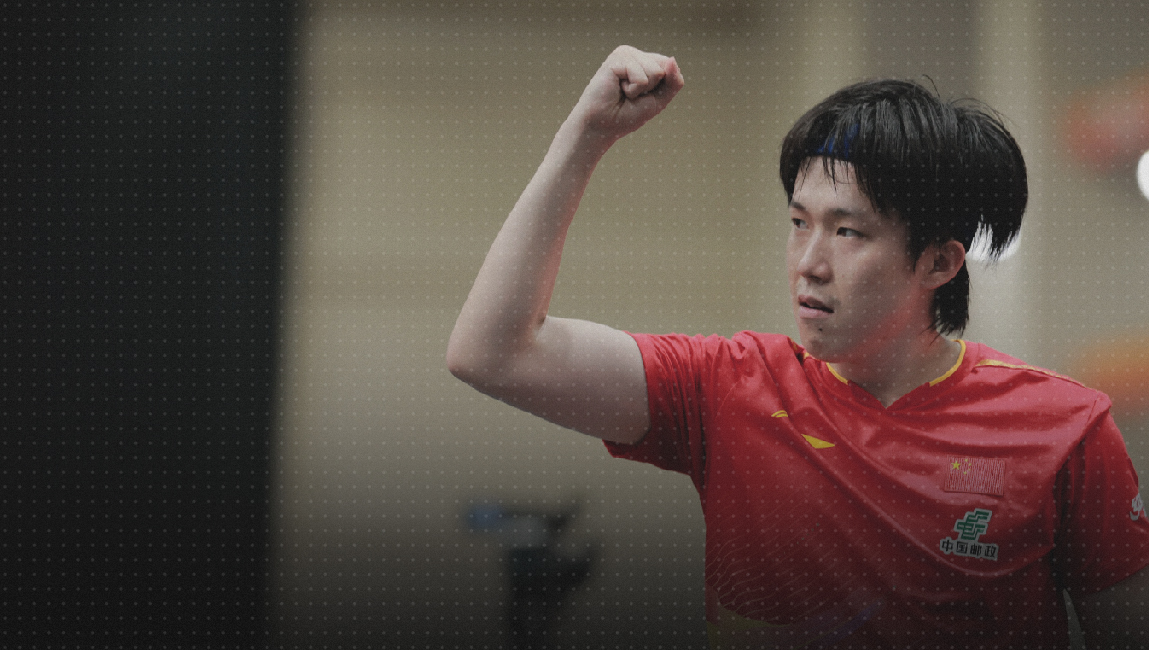
Indian city Bhubaneswar hosted the 28th Asian Table Tennis Championships, bringing together some of the strongest table tennis collectives in the World, including the reigning Olympic and World champions – Team China.
The road to the gold medals was quite a rocky one. The trio that had all the responsibilities on their shoulders, Wang Chuqin, Liang Jingkun, and Lin Shidong, faced a tough challenge in the semi-final against the Japanese team. As it sometimes happens, the true final was played in an earlier round.
Lin Shidong had an unfortunate slip in the 1/4 final round, when he lost to the rising Iranian talent, Benyamin Faraji. It took five sets for the young Iranian to beat the vice-leader of the World Ranking. His teammates, however, did not face much resistance from the other opponents, and Shidong himself had a chance to seal the deal with a 3-0 win against Noshad Alamiyan.
The semi-final against the Japanese team that took out the Koreans (3-1), turned out to be the pinnacle of the tournament. Five long-fought games, and each one was an intense, five-set showdown. The Japanese turned out to be a worthy opponent, having all their leading players in the line-up.
Tomokazu Harimoto and Sora Matsushima made the Japanese fans feel highly hopeful after wins over Liang Jingkun and Wang Chuqin in the first two games. Lin Shidong had all eyes on him in the match-up against Hiroto Shinozuka. He had to secure a victory to keep Team China afloat. His opponent put up some solid resistance, but Lin Shidong was able to take the win.
Liang Jingkun and Wang Chuqin then had to make a comeback and bring back the missing, crucial points on the way to the final. Wang Chuqin took on Harimoto, and after a long-fought 3-2 victory, Liang Jingkun stepped in against Matsushima. The Japanese had a great start to the game, taking a 2-0 lead. But as it often has happened, Liang Jingkun was able to make an amazing comeback and get that decisive 3-2 win, leading Team China into the final.
A pity for the neutral fans, the final turned out to be very one-sided, since Hong Kong’s players could not do much against the Team China trio. 3-0 win sealed the deal and added another gold medal to the great collection of China’s achievements. Tournament draws can sometimes be unfair, since the Japanese team definitely was worthy of the final, but they had to be satisfied with the bronze medals. An opposite situation was for Hong Kong. They were lucky that Chinese Taipei played this tournament without their leader, Lin Yun-ju.
2025 ASIAN TEAM TABLE TENNIS CHAMPIONSHIPS RESULTS
Don’t miss out the news from Table Tennis Media, subscribing to our free newsletter and explore the premium content on our Patreon.

 AUSTRIA
 BELGIUM
 CZECH REPUBLIC
 ENGLAND
 ESTONIA
 FINLAND
 HUNGARY
 ITALY
ITALY LATVIA
 LITHUANIA
 LUXEMBOURG
 NORWAY
 POLAND
 PORTUGAL
 ROMANIA
 SERBIA
 SLOVAKIA
 SLOVENIA

 Table Tennis Media