
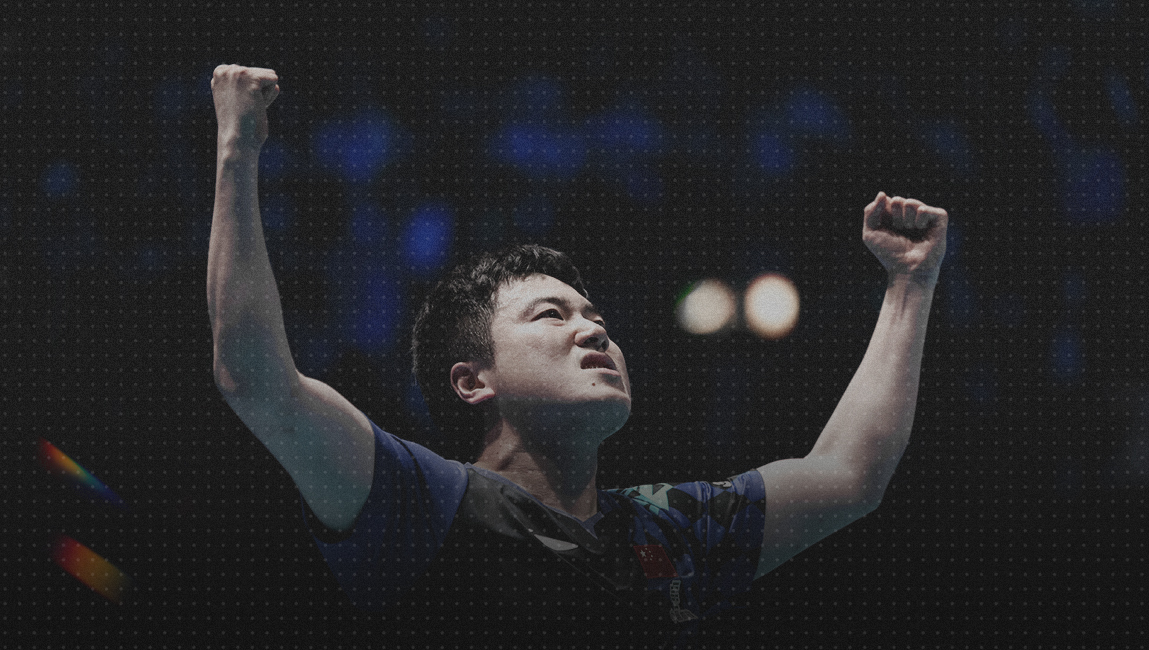
One hundred years after the first World Championships, the 2026 World Team Table Tennis Championships in London featured plenty of world-class matches, and the battle for the medals was highly intense. As usual, there were both good and bad moments throughout the tournament, so let’s look back at what the centenary edition of the World Championships brought to table tennis fans.
Let’s start with the negatives… One of the most outrageous and disgusting news stories regarding the tournament was the sexual assault allegations. The Chinese Taipei player Cheng I-ching was touched inappropriately during metal detector checks at a tournament venue in London. Team officials lodged a protest with the organisers, who apologised and informed them that the security staff member involved was removed from duty, the association said.
Considering the mass influx of foreign criminals in recent years and London holding the unofficial status of the rape capital of Europe, such cases aren’t exactly uncommon in the headlines in the United Kingdom. It’s a disgrace for the International Table Tennis Federation and Table Tennis England to allow such disgusting assaults to happen during their events.
The work of umpires is another eternal issue in table tennis. In all honesty, AI technologies should be implemented more in table tennis because, even at the top level, umpires are more like scorekeepers rather than people who should have an eagle eye for the bunch of illegal serves happening. One good example of how useless the International Table Tennis Federation umpires are was the group stage match between Martin Allegro and Edward Ly.
The Belgian complained multiple times about the illegal serves of his opponent, but the umpire simply ignored him. Why not simply use AI technologies? Instead of their woke gender equality and other nonsense agendas, the ITTF could invest money in developing an app that would replace the umpires: track the scores, use cameras to make decisions about illegal serves, and so on. Umpires in table tennis can and should be replaced by modern technologies to make the game fairer and smoother.
Now the positives… The amazing athletes and Chinese fans—they made this tournament feel special. If not for the love of the Chinese fans for this sport, the International Table Tennis Federation would be completely screwed. Even when the play-off stage began, you could see half-empty stands. It means that the ITTF did a poor job of marketing its most important event in years.
But that’s what you get from what some critics describe as disputed ITTF elections and, according to them, probably the most incompetent president ever—Petra Sörling. Since she has taken the position, the World Championships have been poorly organized. Luckily, the Chinese fans exist. They ensured that there was a great atmosphere in the final stages of the tournament.
In terms of results, the initial group stage did not bring many surprises or upsets. All the higher-ranked teams qualified for the play-off stage without much trouble. The first major upsets came during the group stage featuring the eight top-seeded teams. Team China had been unbeatable in the team event since 2000, but Sweden and South Korea were able to pull off huge upsets.
Oh Jun-sung became the hero for the Koreans, earning victories against the legendary Liang Jingkun and former World No. 1 Lin Shidong, who also had a horrible performance against the Swedes, losing to underdog Elias Ranefur and German Bundesliga star Anton Källberg.
As the play-off stage began, Team China no longer had that unbeatable aura. Their opponents saw that the Chinese were vulnerable this year. Liang Jingkun has been struggling after injuries, Lin Shidong has been inconsistent, and only Wang Chuqin displayed the stellar confidence of someone who was not going to lose any matches.
The Round of 32 against Australia was an easy warm-up, but the Round of 16 against Romania once again highlighted China’s struggles. The most experienced man on the squad, Liang Jingkun, surprisingly lost 0–3 to Eduard Ionescu.
But as the tournament progressed, Team China looked more confident. In the quarterfinal stage, they were able to get past the Koreans quite easily, dropping just one set in three matches. The semifinal stage, on the other hand, looked like a serious challenge. Team France enjoyed a stable run, having a well-balanced roster, and the French fans were definitely pleased to see the progress of Flavien Coton, who secured an easy 3–0 win in the quarterfinal stage against World Championships finalist Hugo Calderano.
In a mix with the Lebrun brothers, Flavien Coton was in the lineup for the semifinal match against Team China. He was able to create plenty of headaches for Wang Chuqin. Eventually, the Chinese superstar won 3–2, and it was Lin Shidong and Felix Lebrun coming up next. While the former World No. 1 kept the score close, the Frenchman was too consistent to give up even a single set. A 3–0 win—France leveled the score, and it smelled like a potential disaster for Team China.
The situation felt even more disastrous as Alexis Lebrun was simply crushing Liang Jingkun in the first two sets, easily winning them 11–3 and 11–1. But this is where Liang Jingkun’s GOAT-level nerves of steel and fighting spirit came into play. He was able to mount yet another comeback, as he had done on many occasions before, and deliver the crucial point for Team China.
Felix Lebrun then faced a win-or-go-home situation against Wang Chuqin in the fourth match. Unfortunately for the French fans, his efforts fell short, and the 2025 World Champion paved the way for Team China to reach the final.
On the other side of the play-off bracket, Team Japan was cruising past its opposition, confidently defeating the Chinese Taipei players in the semifinal. Coming into the final, the Japanese were hopeful of finally breaking the curse and taking the crown from the dominant Chinese team.
Reality, however, turned out to be completely different. Liang Jingkun once again became the hero. In the opening match, he faced Japan’s strongest player, Tomokazu Harimoto. The match followed the same сценарio as the semifinal clash against Alexis Lebrun. It was a slow start for the Chinese veteran, who lost the first two sets, and then a gradual, yet inevitable, takeover began to take place. Liang Jingkun made Tomokazu Harimoto experience déjà vu from 2023, when the Chinese star produced a similar comeback in the quarterfinal stage of the World Championships. Liang Jingkun once again proved that he is an all-time great in the most crucial moment possible.
After such a dramatic start, Wang Chuqin and Lin Shidong could only follow their teammate and cement Team China’s path to the title. Without much drama, they both earned 3–1 victories over Sora Matsushima and Shunsuke Togami, letting their emotions go and celebrating a well-deserved title.
Team China had a rocky road to the title, but the history books will remember only the final result. The upsets made the tournament more exciting to follow, but the Chinese players showed strong character when it mattered most.
It is also worth mentioning the historic achievements of the Brazil team (quarterfinals) and the Kazakhstan team (Round of 16), both reaching their best-ever results. Unfortunately for Hugo Calderano and Kirill Gerassimenko, you need at least two stellar performers to have a realistic chance of winning medals at the World Championships.
We will also publish some extra statistics, infographics, and analysis of this tournament on our Patreon page. Don’t miss out!